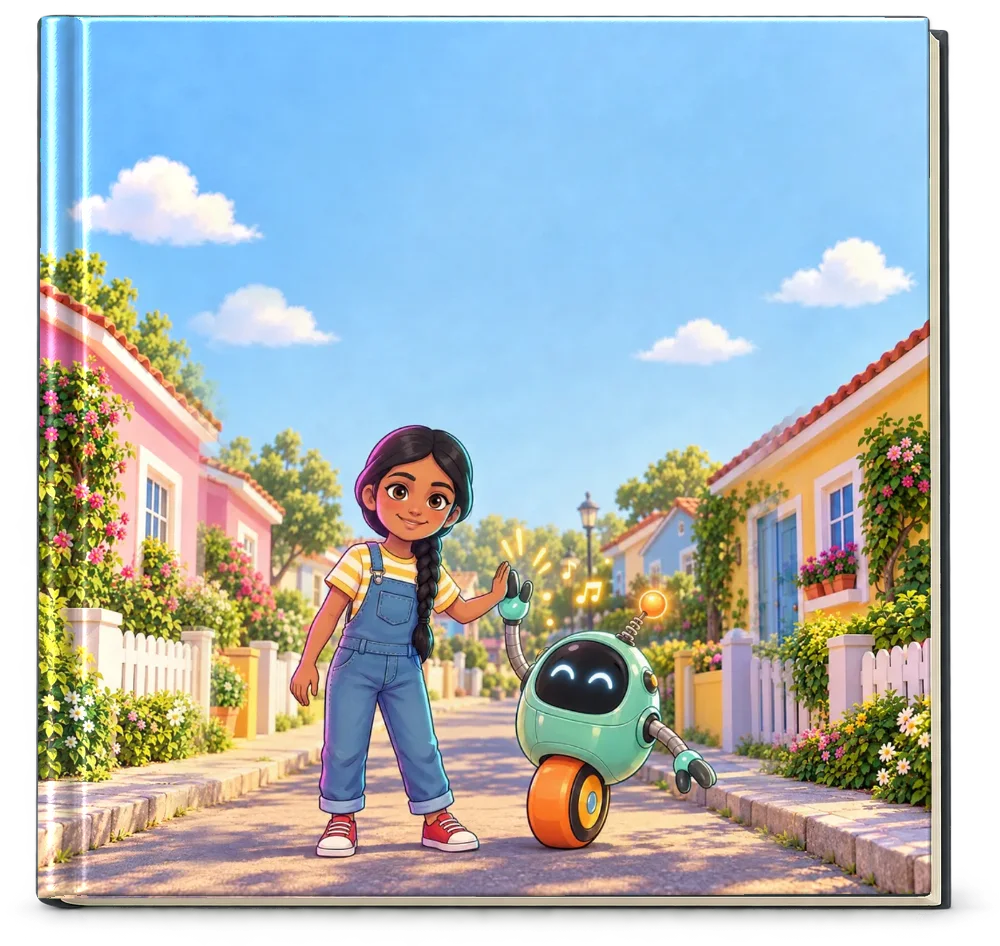
Watch the title change here and on every book on the site. It stays in this browser tab only.
Bolt the Robot
A little robot who does everything differently, and the child who asks, listens and tries it his way.
This story is still being written. Leave your email and we will write once, when it is ready.
Tell me when it's ready



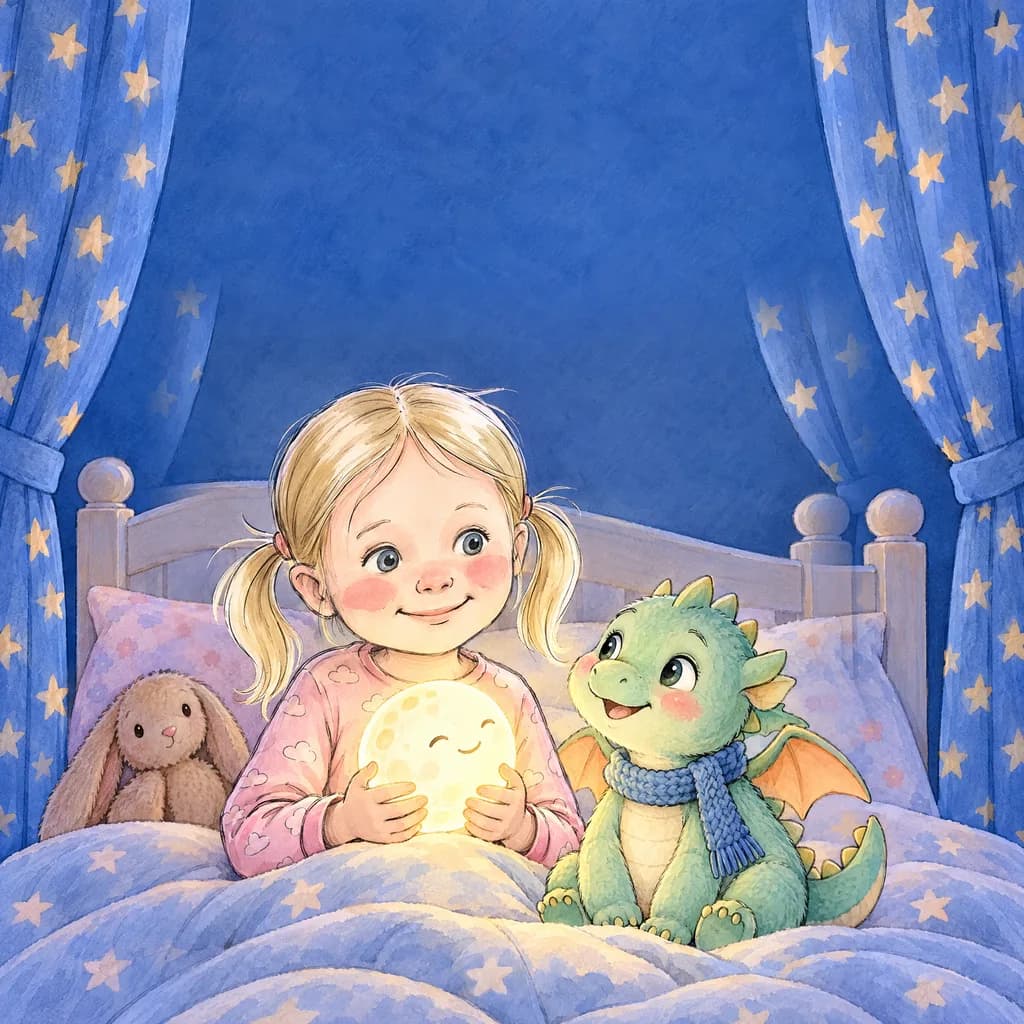
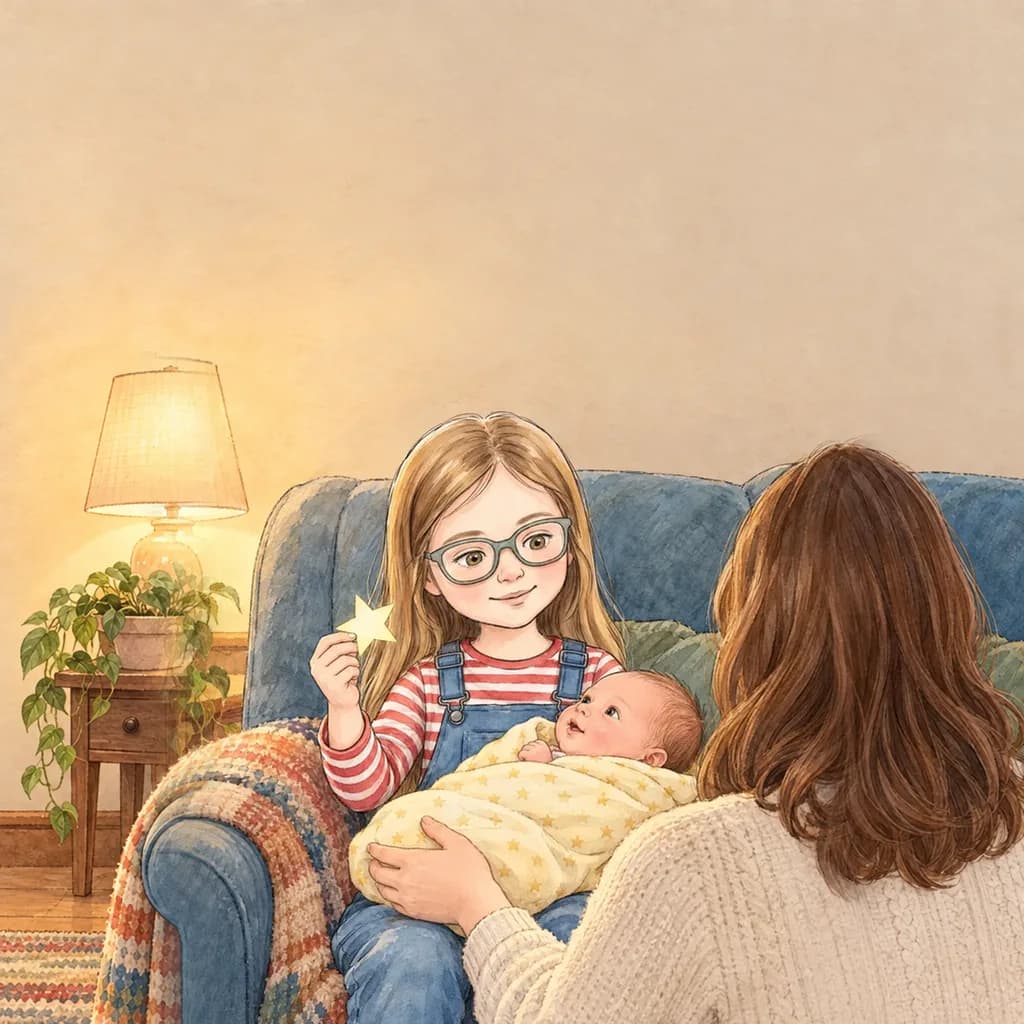


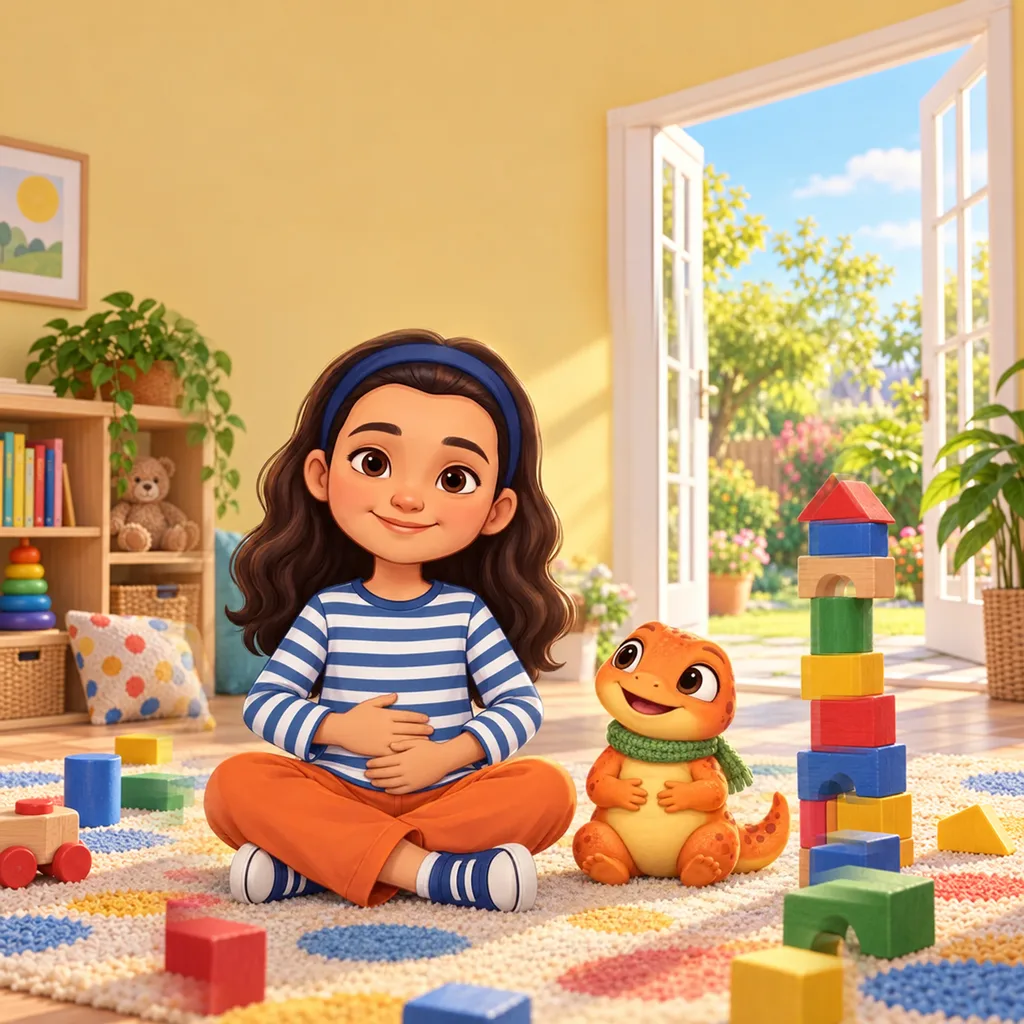



Helps with
Kindness
Making friends with someone who is different: asking, listening and trying it their way.
The tool your child practises in the story
Ask, listen, try it their way
Teach it as three fingers. Ask: one friendly question ("What are you making?"). Listen: really wait for the whole answer, with eyes and ears. Try it their way: join in the way the other person plays before you suggest your own way. Play it at home with a game your child invents: you ask, you listen, you play by your child's rules. Then swap. Remind your child of the three fingers before a playdate, a new class or a visit to cousins.
For grown-ups
What this story is about
Every child meets someone who is different: a classmate who speaks another language, plays in an unusual way, moves or talks differently, or simply does not get the joke. Laughing or walking away is easy. Curiosity takes a little practice. In this story your child chooses curiosity. An inventor next door teaches three small steps, your child uses them to understand a robot nobody else understands, and together they solve a problem neither could solve alone. Then your child passes the steps on to the children who laughed.
Three ways to talk about it
- Show curiosity yourself: when you meet someone new, wonder aloud, "I wonder what they like?" rather than "That's strange."
- Practise asking good questions at home: "What does that mean?", "How do you do it?", "Can you show me?"
- Notice and name kindness when it happens: "You waited and listened until she finished. That was kind."
Three questions to ask
- Why did the other children laugh at Bolt? How do you think Bolt felt?
- What did the child in the story do differently?
- Is there something you do in your own way? How would you like others to find out about it?
Practise the tool together: Ask, listen, try it their way
Teach it as three fingers. Ask: one friendly question ("What are you making?"). Listen: really wait for the whole answer, with eyes and ears. Try it their way: join in the way the other person plays before you suggest your own way. Play it at home with a game your child invents: you ask, you listen, you play by your child's rules. Then swap. Remind your child of the three fingers before a playdate, a new class or a visit to cousins.
If your child often finds it very hard to play with others, is left out again and again, or seems unhappy with friendships for a long time, it is worth talking to your paediatrician or a child psychologist.
Look inside
Twelve illustrated spreads: the picture on the left, the story on the right. These sample pages show an invented child called Priya.
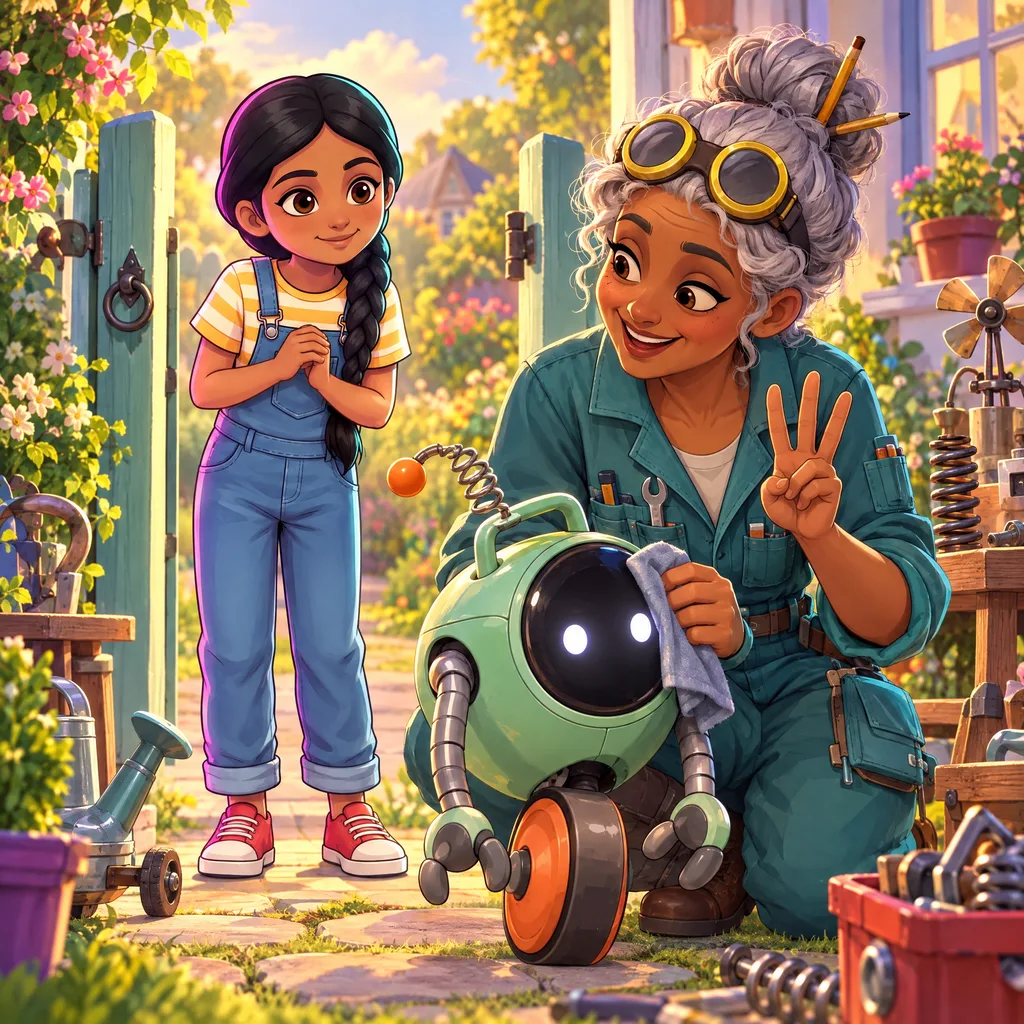
Ms Nova knelt down and polished Bolt's screen with her sleeve. "Bolt isn't broken," she said. "He's new, and he does things his own way. When someone is different from me, I do three things." She counted on her fingers. "Ask. Listen. Try it their way." She winked over her yellow goggles. "Works with robots. Works with people too." Priya took a deep breath and stepped through the garden gate.

Along the path ran little round grates, and through one came Bolt's mint-green glow. Priya knelt and asked only yes-or-no questions. "Bolt, can you hear me?" Beep. Yes! "Does the tunnel split in two?" Beep. Yes. "Can you feel a breeze on one side?" Beep. "Then follow the breeze, Bolt. It comes from the pond!" Priya knew this park by heart. Ruby and Sami tiptoed behind, very, very quietly.

"How do you talk in beeps?" asked Ruby. Priya grinned. "Ask him. Listen. Then try it his way." So they did. Ruby learned that two beeps meant no. Sami learned the happy whistle. And together they made up a brand-new game, beep-ball: you roll the ball, you never kick it, and you cheer in beeps. Beep! Wheee! Beep-boop!
Spread 1 of 3
The styles it will be drawn in

Soft 3D
AvailableRounded, softly lit 3D characters with big expressive eyes. Faces stay recognisable: hair, glasses, smile.
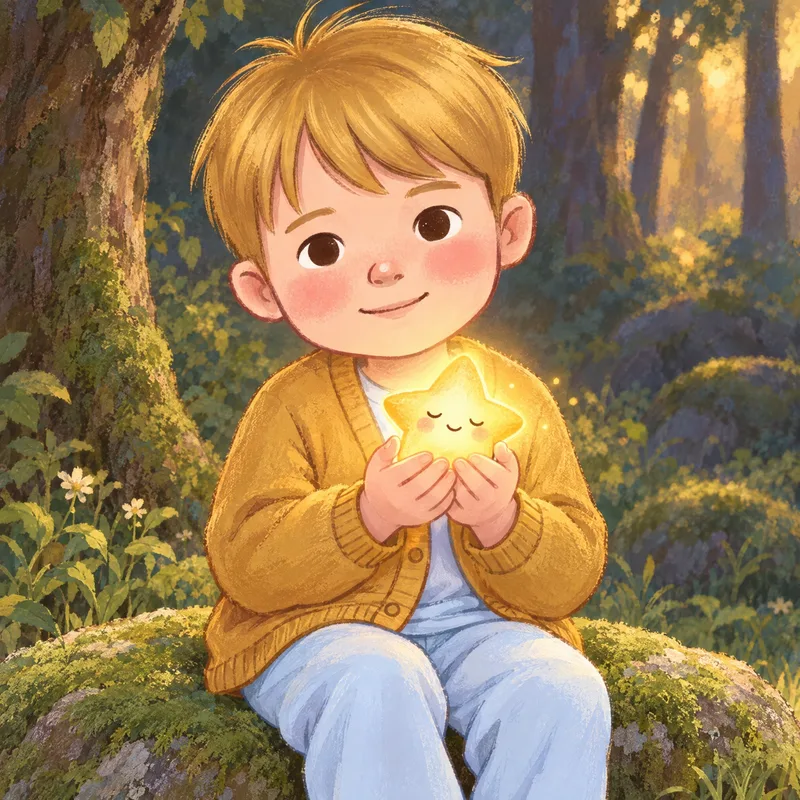
Storybook gouache
AvailableMatte, hand-painted colours with visible brush texture and soft edges, like a classic picture book.
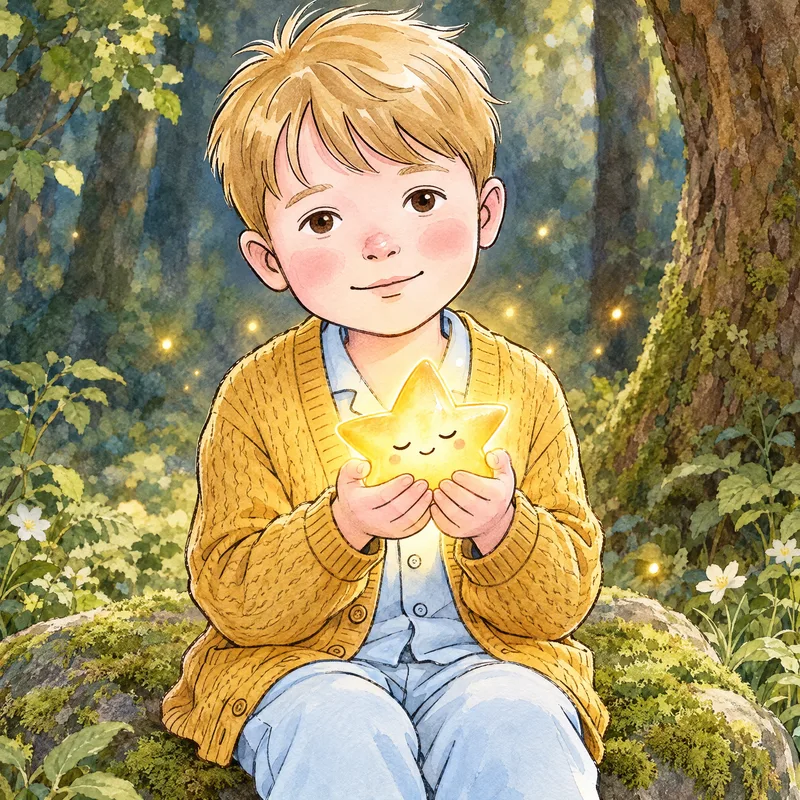
Watercolour
AvailableLoose, soft washes of colour with fine ink lines and the texture of real paper.
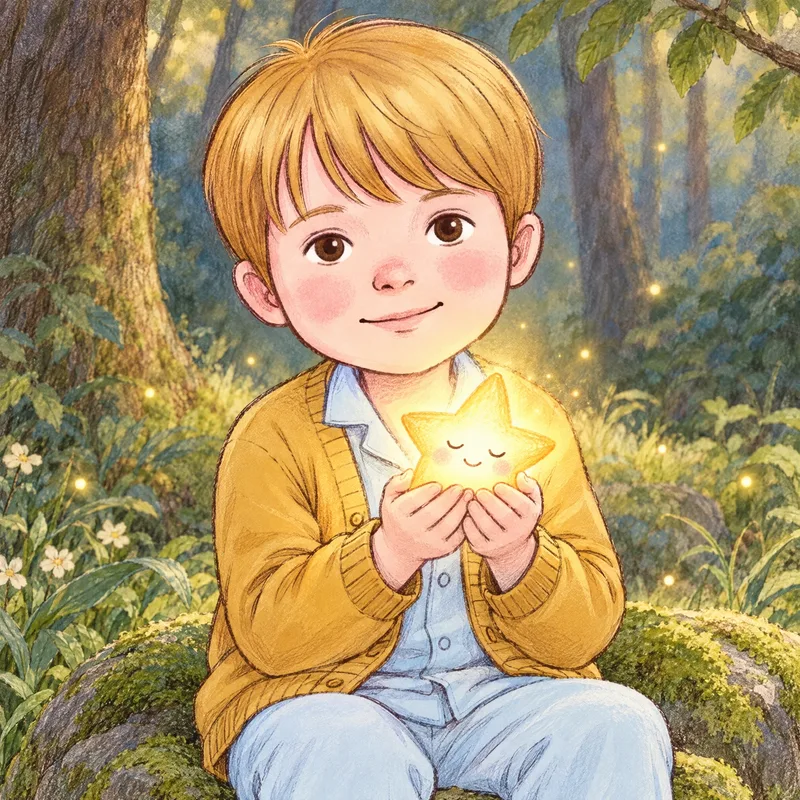
Pencil and watercolour
AvailableColoured pencil over light watercolour washes, warm and drawn by hand.
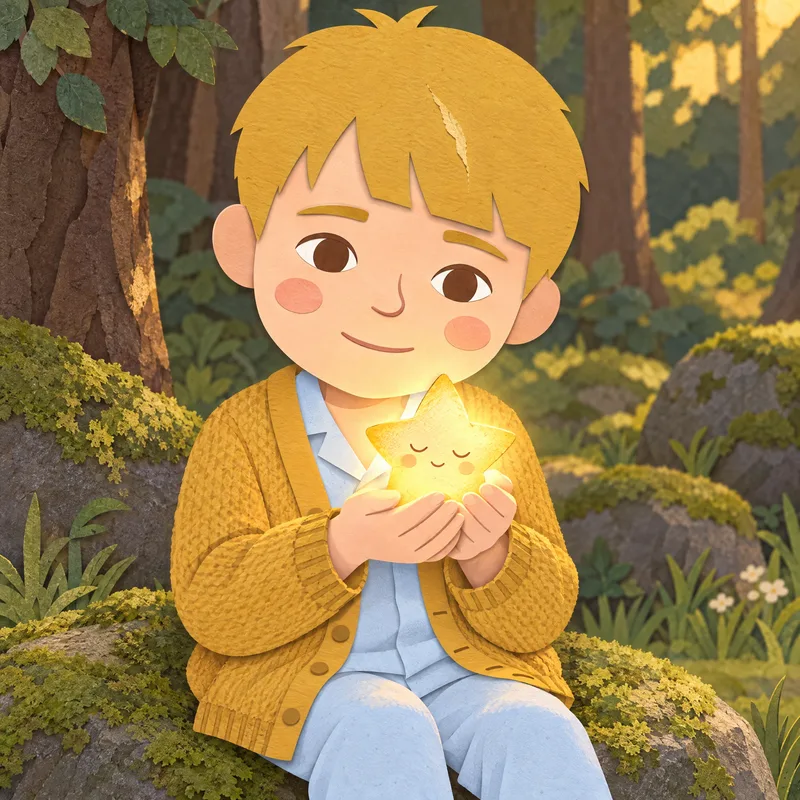
Paper collage
AvailableLayers of cut and torn coloured paper, with grain and edges you can almost touch.
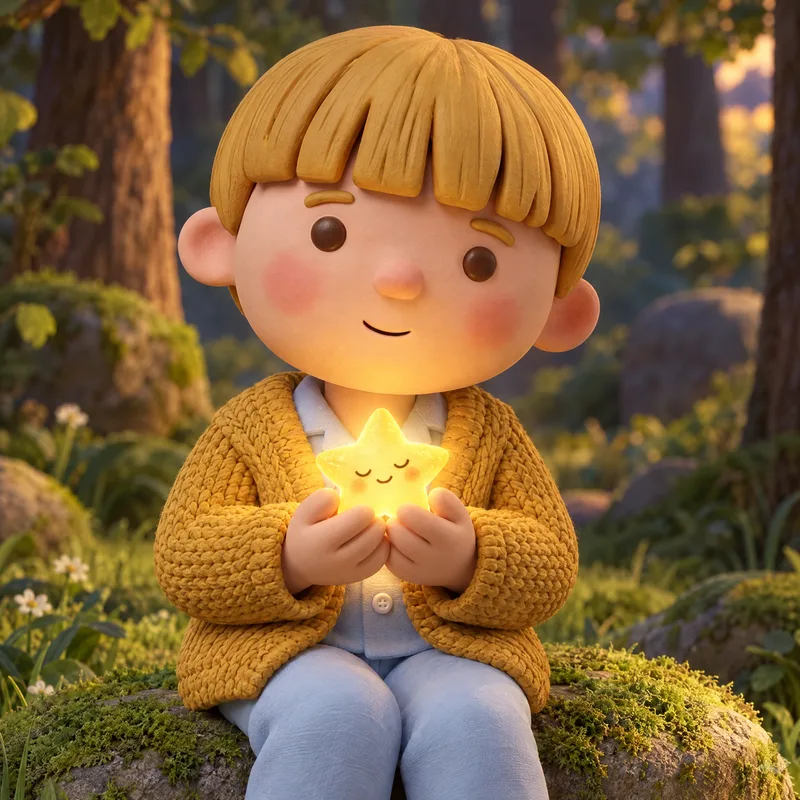
Clay
AvailableSculpted from soft modelling clay, like a handmade stop-motion film.
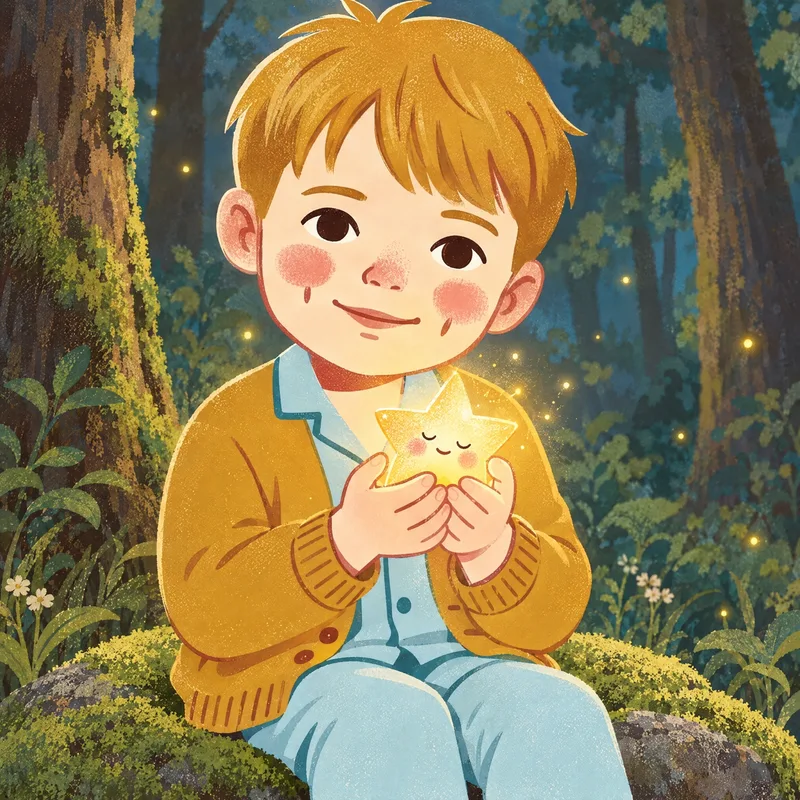
Vintage storybook
AvailableThe look of mid-century picture books: flat shapes, muted colours, a soft printed grain.

Fantasy painting
AvailableRich, painterly fantasy scenes full of glowing light.
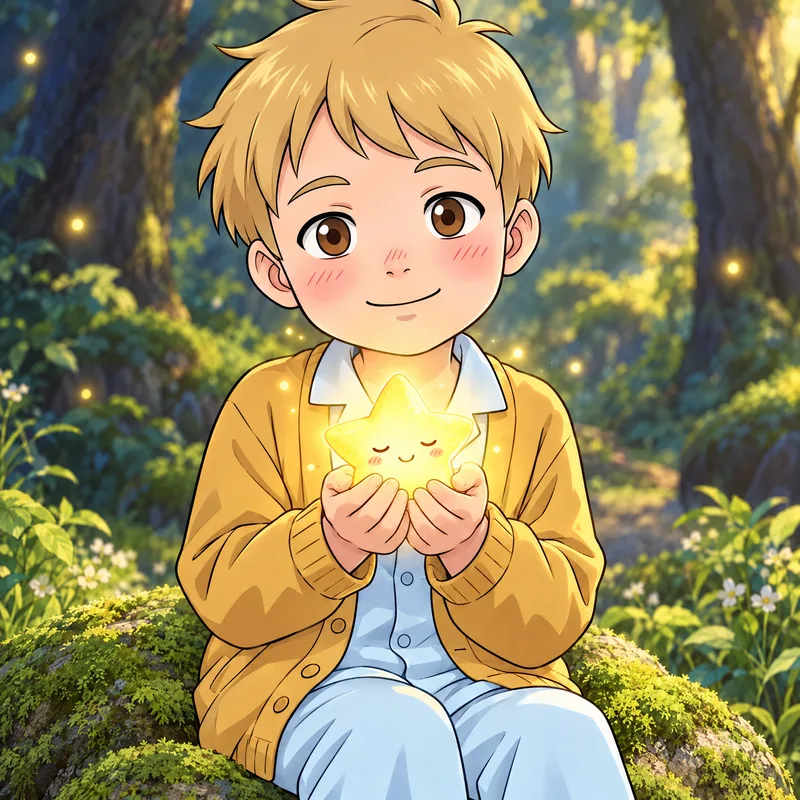
Anime-inspired
AvailableClean line art, cel shading and large, expressive eyes.
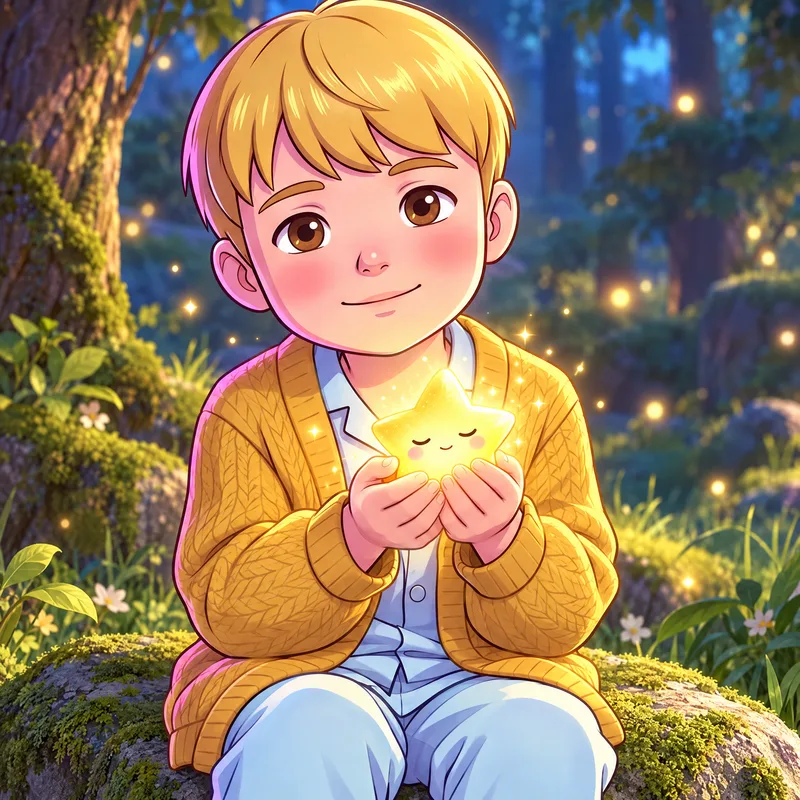
Pop anime 3D
AvailableCel-shaded 3D with big sparkling eyes and bright, glowing colours.
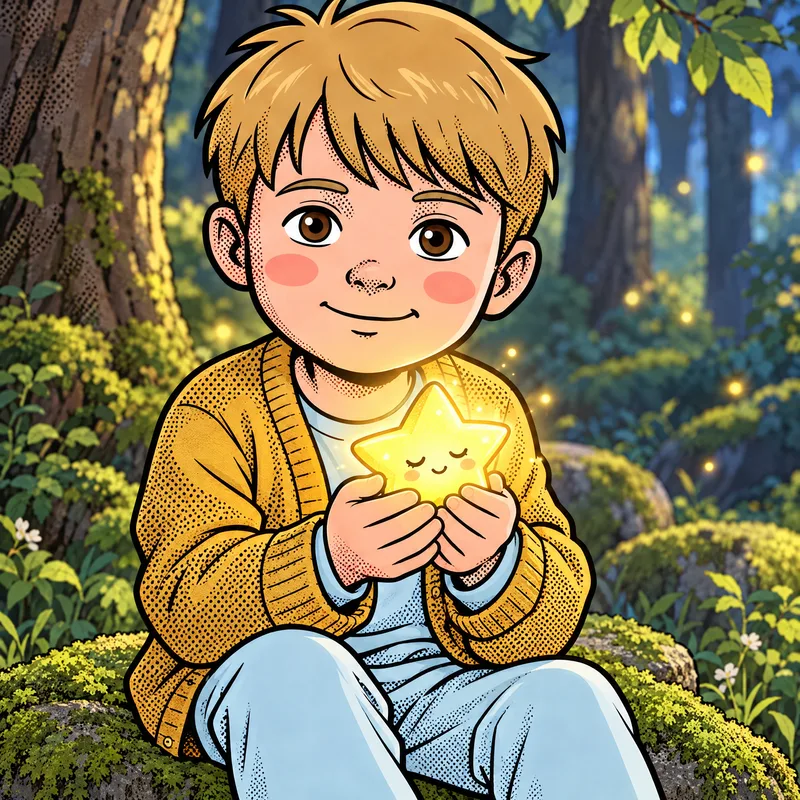
Bold comic
AvailableThick ink lines, flat bright colours, halftone dots and dynamic angles.
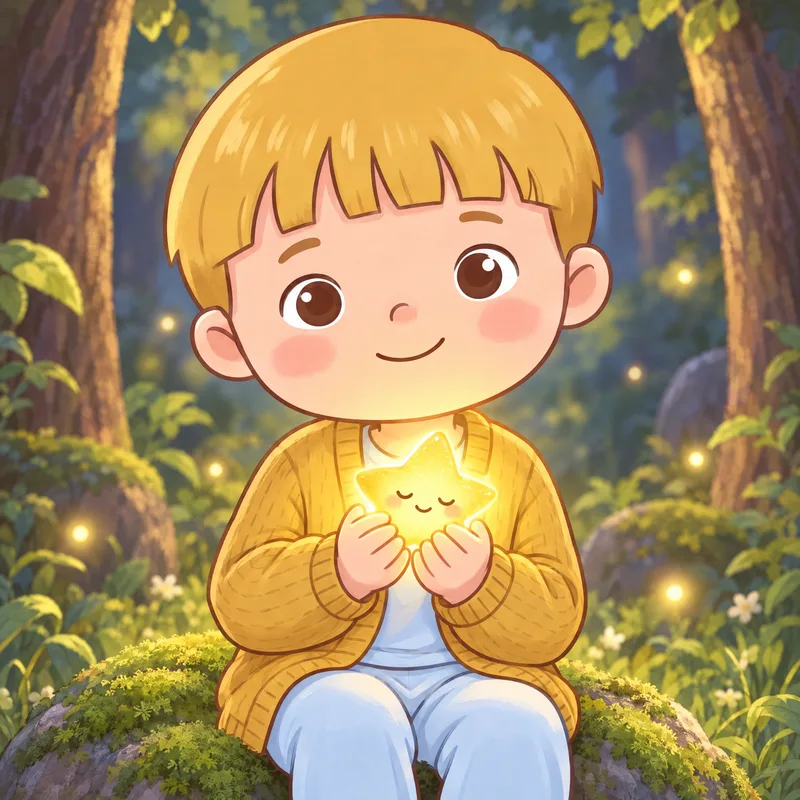
Cute chibi
AvailableTiny bodies, big heads and soft pastel colours.